
Introduction
Shower mixer valves are designed to combine hot and cold water supplies to deliver water at a comfortable and consistent temperature. These valves sit behind the shower controls and regulate both the flow of water and the temperature before it reaches the shower head.
Understanding how shower mixer valves work helps explain how showers maintain stable temperatures and why certain problems can occur over time.
What a Shower Mixer Valve Does
A shower mixer valve mixes hot and cold water together inside a single valve body. By adjusting the controls on the shower, users can increase or decrease the amount of hot or cold water entering the valve.
This allows the valve to deliver water at the desired temperature while maintaining a steady flow through the shower head.
Most mixer valves perform two main functions:
- controlling the water temperature
- regulating the water flow
These two functions work together to provide a comfortable and reliable shower experience.
How the Mixing Process Works
Inside the mixer valve are internal channels that allow hot and cold water to enter from separate supply pipes. When the shower is turned on, both supplies flow into the valve where they mix together.
The user adjusts the shower controls to regulate how much hot or cold water enters the valve. This balance determines the final water temperature that reaches the shower head.
When working correctly, the valve keeps the water temperature steady even when adjustments are made to the controls.
Types of Shower Mixer Valves
There are several types of shower mixer valves used in modern bathrooms. The most common include:
- manual mixer valves that allow the user to control temperature by adjusting hot and cold flow
- thermostatic mixer valves that automatically maintain a consistent temperature
- concealed mixer valves hidden behind the wall with only the controls visible
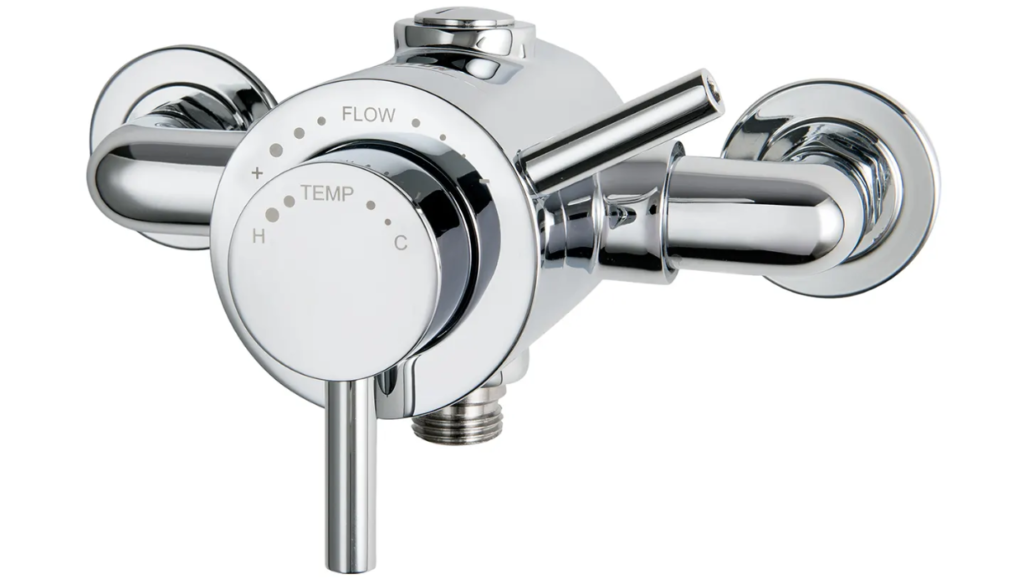
- exposed mixer valves mounted directly on the wall surface
Each type works in a similar way but may include additional components to improve temperature control and safety.
Why Thermostatic Mixers Are Common
Thermostatic mixer valves are widely used because they help maintain a stable water temperature. These valves contain a thermostatic cartridge that reacts to changes in water temperature.
If the hot or cold supply suddenly changes, the valve automatically adjusts the balance to keep the shower temperature consistent.
This helps prevent sudden bursts of hot or cold water during use.
Common Problems With Shower Mixer Valves
Over time, internal components inside the valve can begin to wear out or become affected by limescale build-up.
Some common issues include:
- difficulty adjusting temperature
- inconsistent water temperature
- reduced water flow from the shower head
- stiff or unresponsive shower controls
These problems are often caused by worn cartridges or restrictions inside the valve.
Summary
Shower mixer valves play an important role in controlling both water temperature and flow within a shower system. By combining hot and cold water supplies inside a single valve, they allow users to adjust the shower to a comfortable temperature.
Although these valves are designed to last for many years, internal components can eventually wear out or become affected by limescale, which may lead to temperature or flow problems.
Understanding how mixer valves work makes it easier to recognise common issues and maintain consistent shower performance.