
Introduction
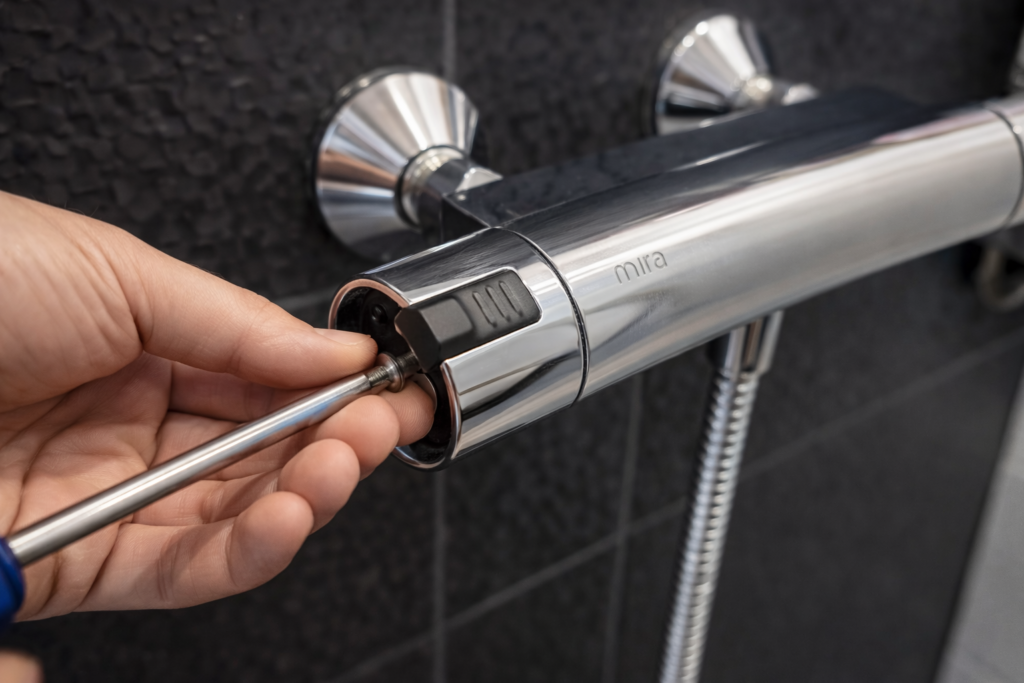
Shower mixer valves are designed to control both the temperature and flow of water in a shower system. By mixing hot and cold water supplies, the valve allows users to adjust the shower to a comfortable temperature while maintaining a steady flow.
Over time, however, the internal components of a mixer valve can wear out or become affected by limescale and debris. When this happens, several common problems can begin to appear.
Fluctuating Shower Temperature
One of the most common problems with shower mixer valves is fluctuating water temperature. The shower may suddenly become too hot or too cold, even though the controls have not been adjusted.
This can happen when internal components inside the valve begin to wear out or when limescale builds up inside the mixing cartridge. In some cases, pressure changes within the hot or cold water supply can also affect temperature stability.
Difficulty Adjusting the Temperature
Another common issue is when the temperature control becomes difficult to adjust. The shower handle may feel stiff, or the temperature may not respond properly when the control is turned.
This is often caused by:
- limescale buildup inside the valve
- worn or damaged cartridges
- debris inside the mixer valve mechanism
When these components begin to deteriorate, the controls may no longer operate smoothly.
Low Water Flow From the Shower
Reduced water flow from the shower head can sometimes be linked to problems inside the mixer valve. If the valve becomes partially blocked or restricted, it can reduce the amount of water reaching the shower.
Possible causes include:
- limescale inside the valve
- worn seals or internal components
- restrictions within the supply pipes connected to the mixer
In some cases, the issue may appear to be a pressure problem but is actually caused by a restriction within the valve itself.
Inconsistent Shower Performance
Some mixer valves may begin to behave unpredictably as internal parts wear out. The shower may work normally one day and then behave differently the next.
For example:
- temperature may change suddenly
- water flow may vary during use
- controls may not respond consistently
These types of problems are often a sign that the internal cartridge inside the valve is beginning to fail.
Worn Internal Cartridges
Many shower mixer valves rely on a cartridge inside the valve body to regulate water flow and temperature. Over time, these cartridges can wear out due to constant use and exposure to limescale.
When the cartridge begins to deteriorate, it may cause:
- poor temperature control
- difficulty adjusting the shower
- reduced water flow
In many cases, replacing the cartridge can restore the normal operation of the mixer valve.
Summary
Shower mixer valves are reliable components that usually operate for many years without problems. However, like any plumbing component, they can eventually develop faults due to wear, limescale build-up or internal damage.
Common issues such as fluctuating temperature, reduced water flow and stiff controls are often linked to worn internal parts within the valve. Understanding these problems can help identify when a mixer valve may need maintenance or repair.