
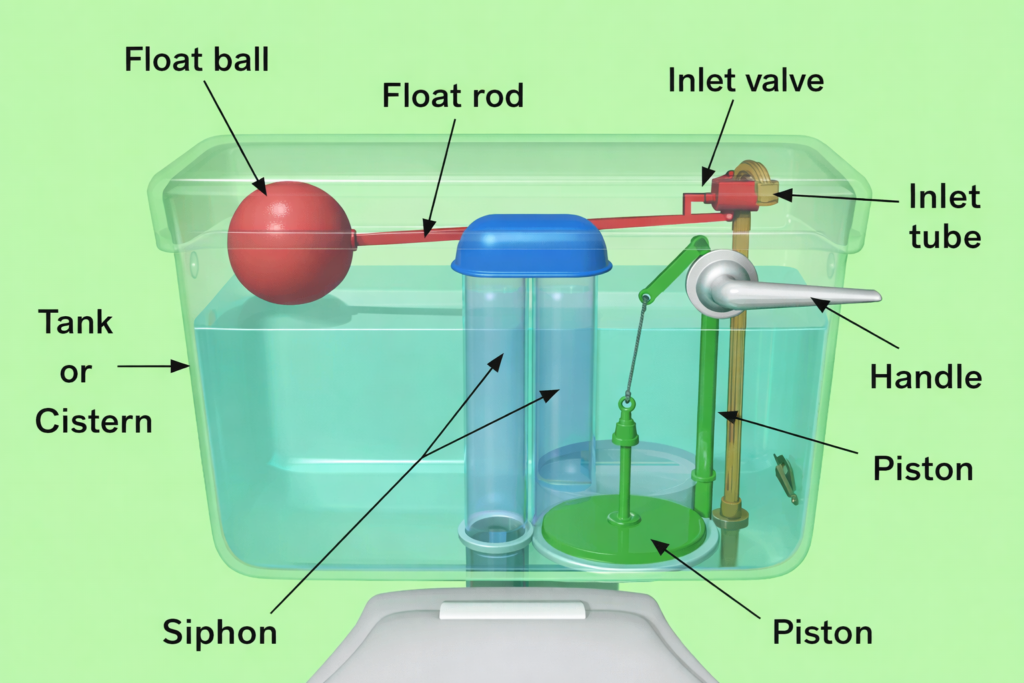
Most modern toilets use a simple system of valves and water pressure to flush waste away and refill the cistern ready for the next use. Although there are many brands and designs, the basic principle behind how a toilet works has remained largely the same for decades.
When you press the flush button or handle, a valve inside the cistern opens and releases water stored in the tank. This water flows quickly into the toilet bowl, creating enough force to push waste through the trap and into the drainpipe.
After the flush has completed, the cistern automatically begins refilling with fresh water so it is ready for the next flush.
The Main Parts of a Toilet System
Inside most toilet cisterns you will find two main components that control the flushing process.
The flush valve is responsible for releasing water from the cistern into the toilet bowl when the button or lever is pressed. On modern toilets this is usually a push-button flush valve that lifts or opens when activated.
The fill valve controls the water refilling the cistern after the flush. As the water level drops during the flush, the fill valve opens and allows fresh water to flow back into the tank. Once the correct level is reached, the valve automatically shuts off.
These two parts work together every time the toilet is flushed.
How the Flush Cycle Works
When you press the flush button, a linkage or cable lifts the flush valve inside the cistern. This allows the stored water to rush quickly into the toilet bowl.
The sudden surge of water pushes waste through the curved trap in the toilet and into the waste pipe. Gravity then carries it away into the drainage system.
As the cistern empties, the float inside the fill valve drops. This triggers the fill valve to open and allow fresh water to refill the tank.
Once the cistern reaches the correct level again, the float rises and shuts the valve off. The toilet is now ready for the next flush.
Different Types of Toilet Systems
Although the basic operation is the same, toilets are built in several different configurations.
Close-coupled toilets are the most common design in modern homes, where the cistern sits directly on the back of the toilet bowl.
Concealed cistern toilets hide the tank inside a wall or furniture unit, leaving only the flush plate visible.
Older properties may still have high-level or low-level cisterns with a pull chain instead of a push button.
Each system uses the same core components but may require slightly different access for repairs.
Why Toilet Systems Sometimes Fail
Toilet mechanisms work reliably for years, but they do eventually wear out.
Rubber seals inside flush valves can degrade, causing water to constantly run into the bowl. Fill valves may stick or fail to shut off properly, leading to slow filling or overflowing.
Many problems are caused simply by worn parts rather than the toilet itself being faulty.
The good news is that most modern toilet systems are designed so the internal valves can be replaced without needing to remove the entire toilet.
✅ Tip for your page structure
At the bottom of this post, link to your other guides such as:
- Flush valve problems
- Fill valve issues
- Weak toilet flush
- Toilet constantly running
This keeps the hub page structure strong, which you’ve been building across the site.