
Introduction
Shower mixer valves are designed to combine hot and cold water supplies to produce water at a comfortable temperature. While all mixer valves perform this basic function, there are two common types used in bathrooms: manual mixer valves and thermostatic mixer valves.
Understanding the difference between these two types of mixers helps explain how showers control water temperature and why thermostatic valves are often preferred in modern bathrooms.
What Is a Manual Shower Mixer?
A manual shower mixer valve allows the user to control the balance between hot and cold water by adjusting the shower controls. By turning the controls, more hot or cold water enters the valve, which changes the final water temperature.
Manual mixers are simple in design and typically have one or two controls that adjust both the flow and temperature of the water.
Because they rely entirely on manual adjustment, the temperature can change if there are fluctuations in the water supply. For example, if someone turns on a tap elsewhere in the house, the shower temperature may briefly change.
What Is a Thermostatic Shower Mixer?
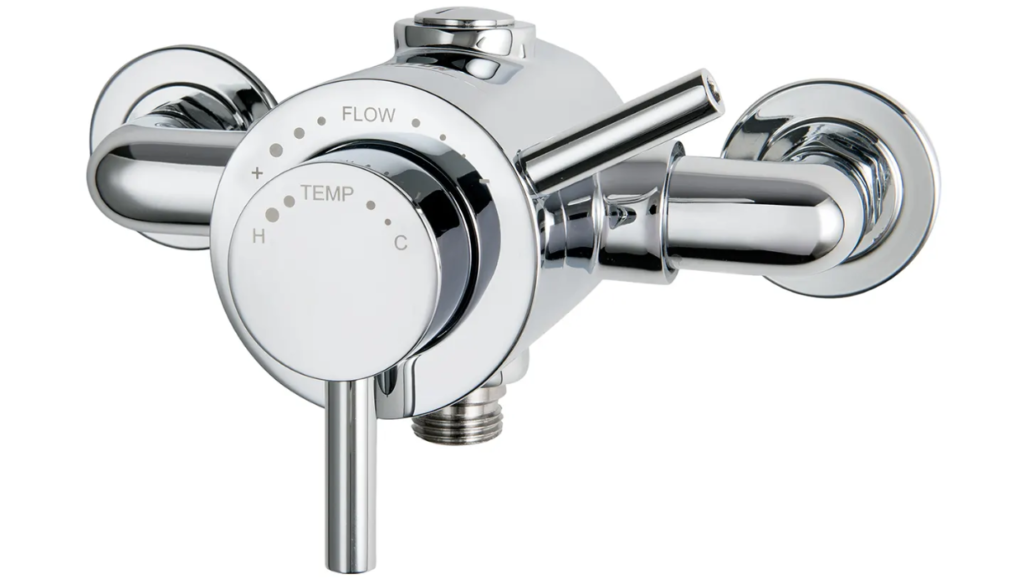
A thermostatic shower mixer valve contains an internal thermostat that automatically regulates the water temperature. The valve constantly monitors the temperature of the mixed water and adjusts the balance between hot and cold supplies to maintain the selected temperature.
If there is a change in water pressure or supply temperature, the thermostatic valve reacts quickly to correct the balance.
This helps keep the shower temperature consistent, even when other taps or appliances are used elsewhere in the home.
Key Differences Between the Two
Although both types of valves mix hot and cold water, they operate in different ways.
Manual mixer valves:
- rely on the user to balance hot and cold water
- may experience temperature changes if water pressure fluctuates
- have a simpler internal design
Thermostatic mixer valves:
- automatically maintain a consistent temperature
- respond to pressure changes within the plumbing system
- include a thermostatic cartridge for temperature regulation
Because of these features, thermostatic mixers are often considered safer and more reliable for everyday use.
Safety and Temperature Control
One of the main advantages of thermostatic mixer valves is improved safety. Many thermostatic valves include a safety stop that prevents the water temperature from becoming dangerously hot.
This feature is particularly useful in homes with children or elderly users, where sudden temperature changes could cause discomfort or burns.
Manual mixers do not provide this automatic protection and rely entirely on the user adjusting the controls correctly.
Which Type Is Most Common?
Thermostatic mixer valves have become the most common type used in modern bathroom installations. Their ability to maintain stable temperatures and respond quickly to pressure changes makes them suitable for many households.
However, manual mixers are still used in some installations because they are simpler in design and may be easier to install or replace.
Summary
Both manual and thermostatic shower mixers are designed to combine hot and cold water to deliver a comfortable shower temperature. Manual mixers rely on the user to adjust the temperature, while thermostatic mixers automatically maintain a consistent temperature by regulating the balance of water supplies.
Understanding the differences between these two types of mixer valves helps explain how shower systems operate and why thermostatic mixers are commonly used in modern bathrooms.