
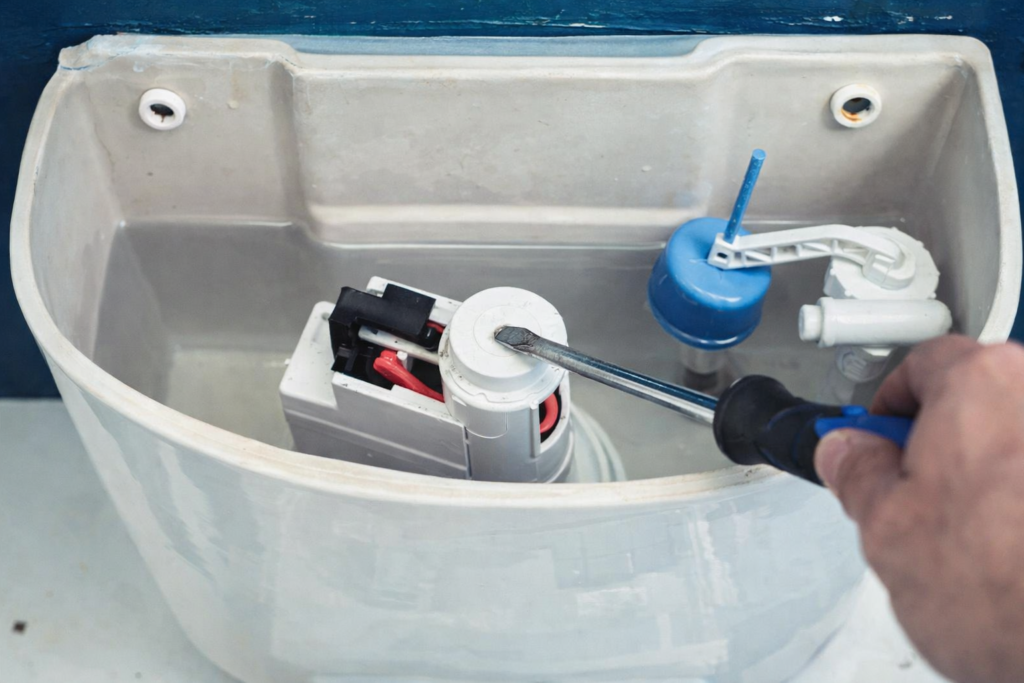
A toilet that keeps running after flushing is one of the most common problems homeowners experience. Instead of the cistern refilling and stopping normally, water continues to flow into the bowl long after the flush has finished.
Sometimes it’s just a quiet trickle that you can barely hear. Other times the cistern keeps refilling every few minutes.
In most cases, the problem is caused by a worn or poorly adjusted part inside the cistern rather than a fault with the toilet itself.
How a Toilet Is Supposed to Work
When you press the flush button or handle, the flush valve opens and releases water from the cistern into the bowl.
After the flush:
- The flush valve closes and seals the cistern.
- The fill valve opens to refill the tank with water.
- Once the correct water level is reached, the fill valve shuts off.
If any part of this process doesn’t happen properly, the toilet may continue running.
The Most Common Causes of a Running Toilet
Several different faults can cause a toilet to keep running after flushing.
Worn Flush Valve Seal
One of the most common causes is a worn or damaged seal on the flush valve.
The seal is designed to hold water inside the cistern after the flush. When it becomes worn or misshapen, water slowly leaks through into the toilet bowl.
Because the water level keeps dropping, the fill valve continues topping up the cistern.
Signs of this problem include:
- Water constantly trickling into the bowl
- The cistern refilling every few minutes
- A faint running water sound even when the toilet hasn’t been used
Fill Valve Not Shutting Off Properly
If the fill valve fails to shut off completely, water continues entering the cistern even after it is full.
Most cisterns have an internal overflow system. When the water level gets too high, the excess water simply flows down the overflow into the bowl.
This can look like a toilet that never stops running.
Common causes include:
- Debris trapped in the valve
- Worn internal seals
- Incorrectly adjusted float level
Water Level Set Too High
Sometimes the problem is simply that the water level inside the cistern is set too high.
If the water level rises above the overflow opening, the excess water constantly drains into the toilet bowl.
This causes the fill valve to repeatedly top up the cistern.
Flush Button or Mechanism Sticking
Push-button toilets rely on a mechanism or cable to lift and release the flush valve.
If the button sticks or the mechanism does not fully return to its resting position, the flush valve may not seal properly.
This can leave a small gap that allows water to leak into the bowl.
Limescale and Debris
In hard water areas, limescale can gradually build up on internal parts of the cistern.
This buildup can prevent valves from sealing correctly or stop components from moving freely.
Over time this can lead to a toilet that runs constantly.
Why Running Toilets Shouldn’t Be Ignored
A running toilet may seem like a minor annoyance, but it can waste a surprising amount of water.
Even a slow leak can send hundreds of litres of water down the drain each day.
Fixing the issue early not only stops the noise but also helps prevent unnecessary water usage and higher water bills.
Summary
A toilet that keeps running after flushing is usually caused by a problem inside the cistern. The most common causes include worn flush valve seals, faulty fill valves, water levels set too high, or sticking flush mechanisms.
Most of these issues involve parts that naturally wear out over time and can often be repaired by replacing the faulty valve or adjusting the cistern components.
Identifying the cause early helps prevent wasted water and keeps the toilet working as it should.